
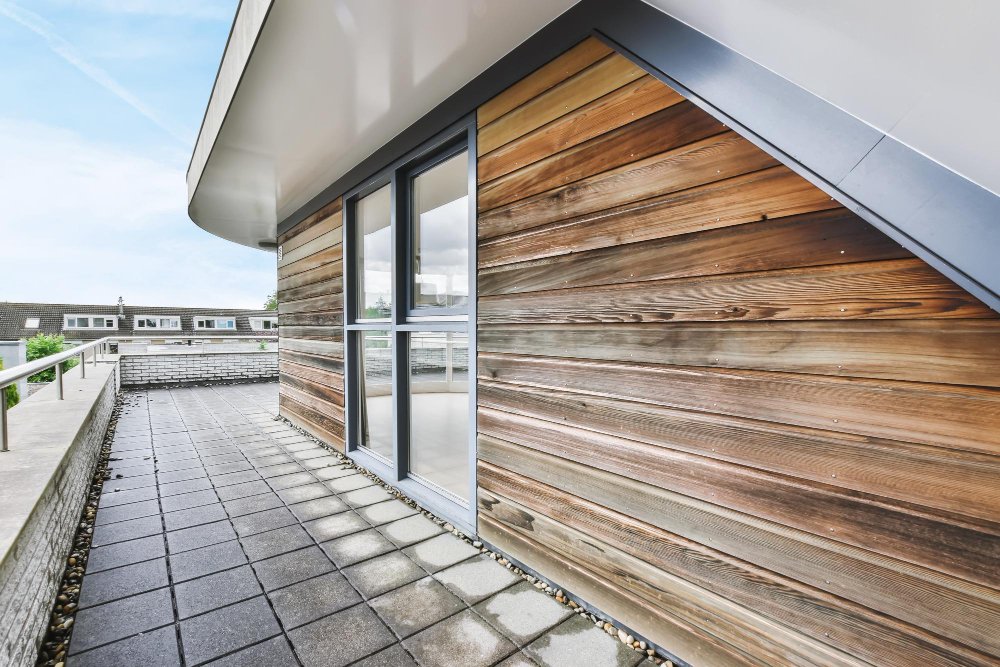
What Is Engineered Wood Siding?
Engineered wood siding is a manufactured exterior product made by combining wood fibers, resins, waxes, and protective additives under high pressure.
The result is a durable siding material designed to mimic authentic wood.
Common Features Include:
- Realistic wood textures
- Enhanced durability
- Moisture protection
- Factory-applied finishes
It combines beauty with improved performance.
Why Homeowners Are Choosing Engineered Wood
Popularity continues to grow for several reasons.
Major Advantages Include:
- Lower maintenance requirements
- Natural aesthetics
- Long lifespans
- Improved durability
It bridges the gap between traditional wood and modern materials.
How It Differs From Traditional Wood
Traditional wood requires ongoing upkeep.
Many homeowners researching engineered wood siding are attracted to its reduced maintenance demands.
Traditional Wood Often Requires:
- Frequent repainting
- Rot repairs
- Pest treatments
Engineered Wood Offers:
- Improved moisture resistance
- Pest resistance
- Longer-lasting finishes
This simplifies ownership.
Advantages of Engineered Wood Siding
1. Beautiful Appearance
Modern manufacturing creates highly realistic textures.
Many products closely resemble natural cedar.
2. Lightweight Installation
Compared to heavier products, installation is often faster.
3. Improved Durability
Protective treatments enhance performance.
4. Greater Design Flexibility
Homeowners have numerous options.
Popular Design Styles
Common Profiles Include:
- Lap siding
- Board and batten
- Shingle styles
- Vertical panels
These profiles complement many architectural styles.
Potential Drawbacks
No material is perfect.
Homeowners Should Consider:
- Higher costs than vinyl
- Periodic maintenance
- Professional installation requirements
Understanding limitations helps homeowners plan properly.
How Long Does Engineered Wood Last?
With proper maintenance, many products last:
- 30 to 50 years
Longevity depends on:
- Climate conditions
- Installation quality
- Maintenance habits
Routine inspections remain important.
Maintenance Requirements
Maintenance is relatively simple.
Recommended Tasks Include:
- Annual inspections
- Cleaning debris
- Inspecting caulking
- Touch-up painting when needed
Preventive care protects your investment.
How It Compares to Other Siding Materials
Engineered Wood Advantages
- Natural appearance
- Lightweight construction
- Enhanced durability
Vinyl Advantages
- Lower cost
- Minimal maintenance
Fiber Cement Advantages
- Excellent fire resistance
- Extreme durability
Every material serves different priorities.
How Exterior Remodeling Increases Home Value
Updated exteriors remain highly desirable.
Benefits include:
- Enhanced curb appeal
- Improved buyer confidence
- Weather protection
- Architectural character
Quality siding often improves marketability.
Professional Installation Is Essential
Expert installation ensures long-term performance.
Professionals Provide:
- Proper weather barriers
- Accurate spacing
- Correct flashing
- Code compliance
Improper installation can shorten lifespan.
Many homeowners researching engineered wood cladding discover that installation quality is one of the most important factors affecting durability.
Questions Homeowners Should Ask
- What climate do I live in?
- How much maintenance do I prefer?
- What is my remodeling budget?
- What architectural style do I have?
- How long will I stay in this home?
These answers simplify decision-making.
Tips for Long-Term Success
- Inspect annually
- Maintain protective finishes
- Repair caulking promptly
- Clean gutters regularly
Routine maintenance extends lifespan.
Engineered wood siding offers homeowners an excellent balance between natural beauty and modern durability.
Its ability to replicate traditional wood while minimizing maintenance makes it an increasingly popular choice.
By investing in engineered wood siding, homeowners can create beautiful exteriors that deliver long-term performance, curb appeal, and lasting value.